Sustainable Jewelry: Why Producing Less Means More
Sustainability at ASEL RAKHAT is not a claim printed on packaging. It is the logical consequence of how things are designed, made, and shipped here. Handmade jewelry from Berlin that is only produced after an order, from materials originally made for construction.
Made to order: no piece without a reason
At ASEL RAKHAT, no piece is made in advance. Every piece is produced only when an order comes in.
That sounds simple. It is also simple. And it means: no overproduction, no warehouse full of unsold pieces, no seasonal stock disposed of at the end of the year.
Made to order is the most direct form of sustainable jewelry. Not because it is a label, but because there is no alternative when you make things individually by hand.

Construction material becomes jewelry: the second life of industrial nuts
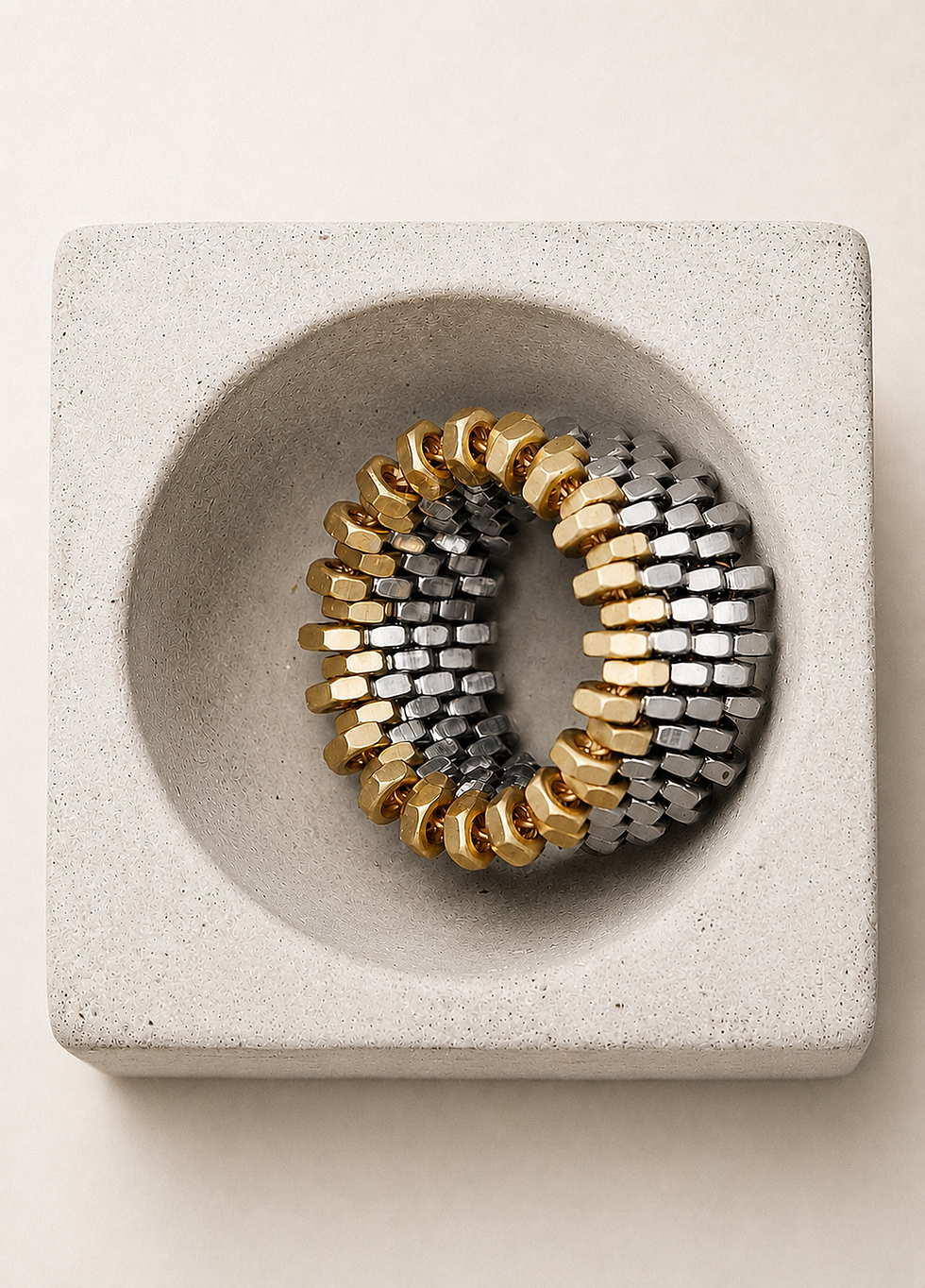
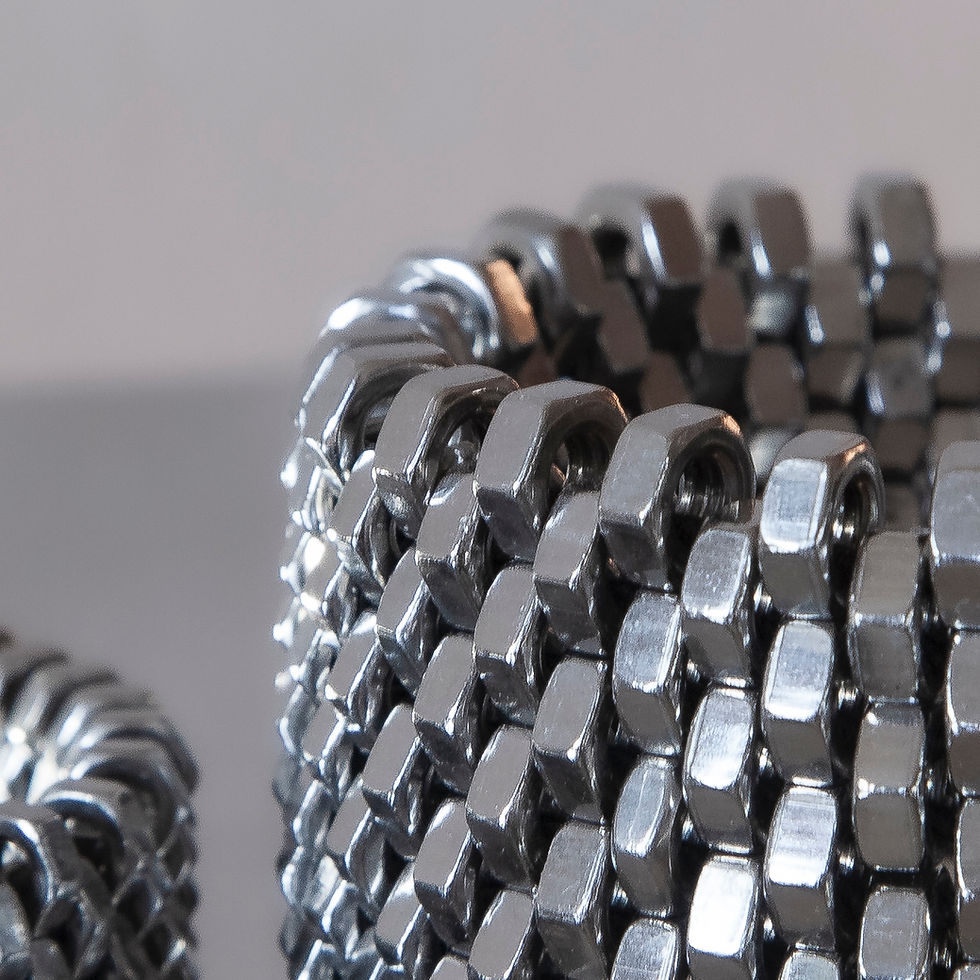
Stainless steel nuts and brass nuts are building products. They connect load-bearing structures, hold constructions together, and are produced in millions of units. They are not raw materials mined or smelted specifically for jewelry.
At ASEL RAKHAT, these industrial components are translated into something else: wearable objects with their own formal language. This is upcycling in the most literal sense. Not as a trend, but as a starting point.
No smelting, no casting, no chemical treatment. The material stays what it is. It is only reassembled.
Handmade in Berlin-Mitte: short supply chain, clear origin
Sustainable jewelry also means: knowing where it comes from.
Every piece of ASEL RAKHAT is made in Berlin-Mitte. Not in a factory abroad, not through a chain of suppliers, but by one person, in one place. The supply chain is as short as possible.
That means control over the result. And responsibility for every single piece.

Packaging that disappears
The packaging at ASEL RAKHAT consists of a small dust bag and paper. No box, no styrofoam, no plastic, no synthetic lining.
That was a deliberate decision: less material that gets immediately thrown away. The dust bag stays useful, the paper is recyclable. That is all.
Many brands invest in packaging that impresses. At ASEL RAKHAT, the piece should impress — not the box.
Longevity is the most sustainable quality
A piece that lasts is more sustainable than many pieces that are quickly replaced.
Stainless steel does not rust. Brass develops patina, but not weakness. Both materials are built for decades, not for seasons. That is not a promise — that is the material property.
Limited, handmade jewelry that is numbered and delivered with a certificate holds a different kind of value than mass-produced pieces. It is not discarded. It is worn, passed on, kept.
That is the most sustainable form of jewelry: one that stays.
Sustainable jewelry that does not call itself that
ASEL RAKHAT does not call itself a sustainable jewelry brand. There is no green certification, no label on the website.
What there is: pieces that only exist after an order. Materials from the construction industry. Production in Berlin-Mitte. Minimal packaging. And a design approach that prioritizes longevity over trends.
Sometimes the most sustainable thing a brand can do is simply: less, better, longer.

Comments